Through this swim around the Isle of Arran, I’m raising funds for the vital marine conservation work of Community of Arran Seabed Trust (COAST). You can donate via this JustGiving page here.
For my other daily blog posts, please click here.
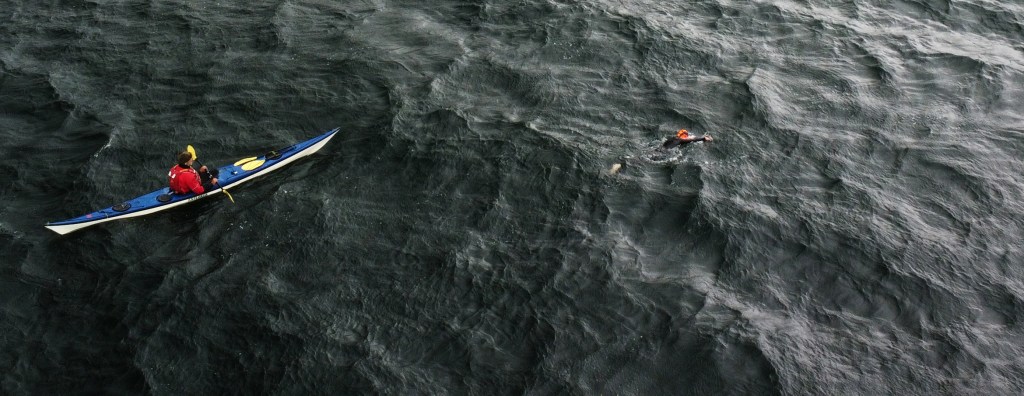
Yesterday Steve and I were back at Kildonan, facing towards Pladda Island and contemplating what might be a final – and very long – swim.
I wasn’t that confident. The previous evening, after the 12 kilometres from Sliddery to Kildonan, I didn’t feel on top form. Most likely it was a case of cumulative fatigue. But the hangover from my brush with the lion’s mane jellyfish near Bennan Head might not have helped.
I was strongly motivated to complete if I could, though. Steve pointed out that Tuesday might see the wind switch from a southerly to a north-westerly and make for some tough swimming conditions. And, after Tuesday, I’d have run out of days on Arran.
The first challenge of the day was getting water-born again. The shore where I got out on Sunday is a gentle ramp of stones with a fearsome crust of barnacles and mussel shells. I lurched forward, accompanied by visions of a twisted ankle, barnacle cut or slashed wetsuit. Once the water touched my knees, I flopped over and skulled with head and arms held high to try and float myself out to deeper water.
COAST and the creation of the South Arran Marine Protected Area
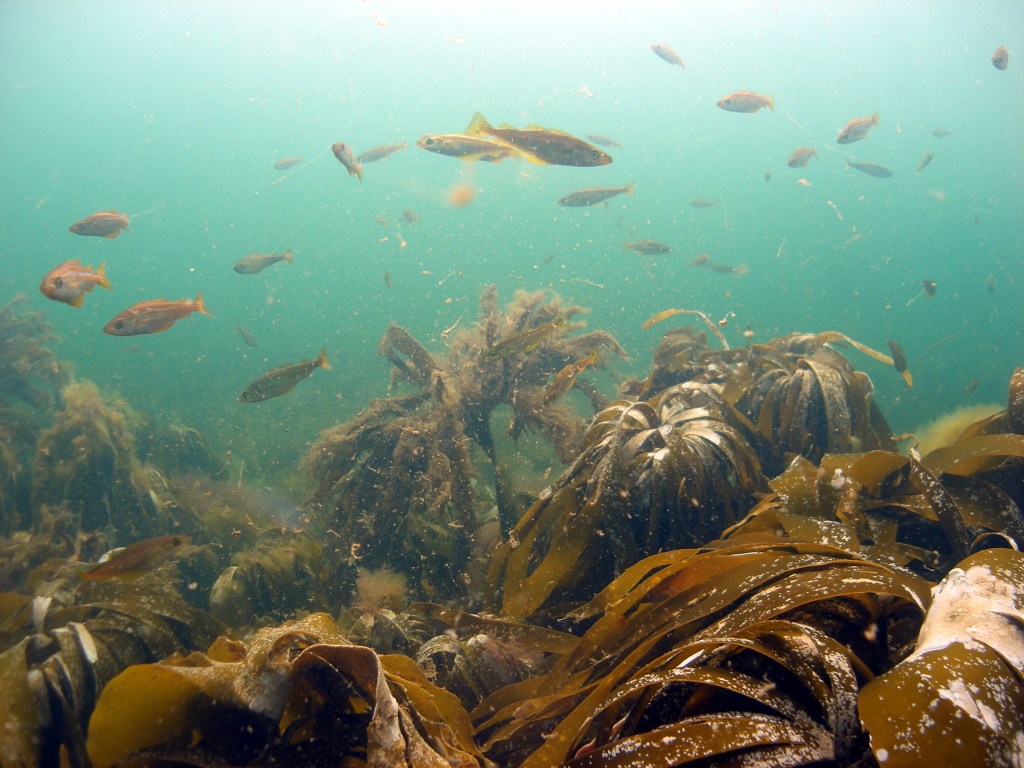
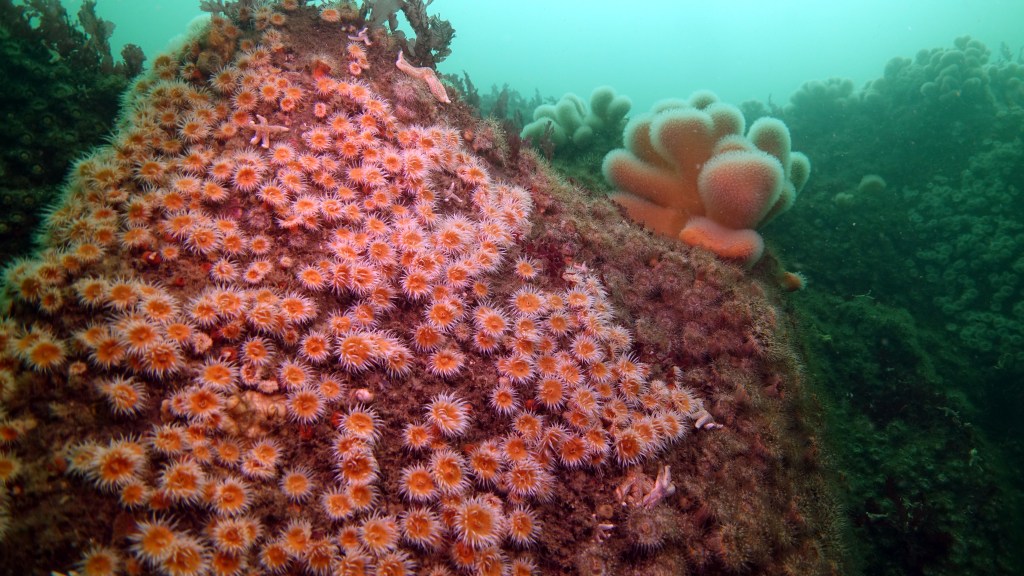
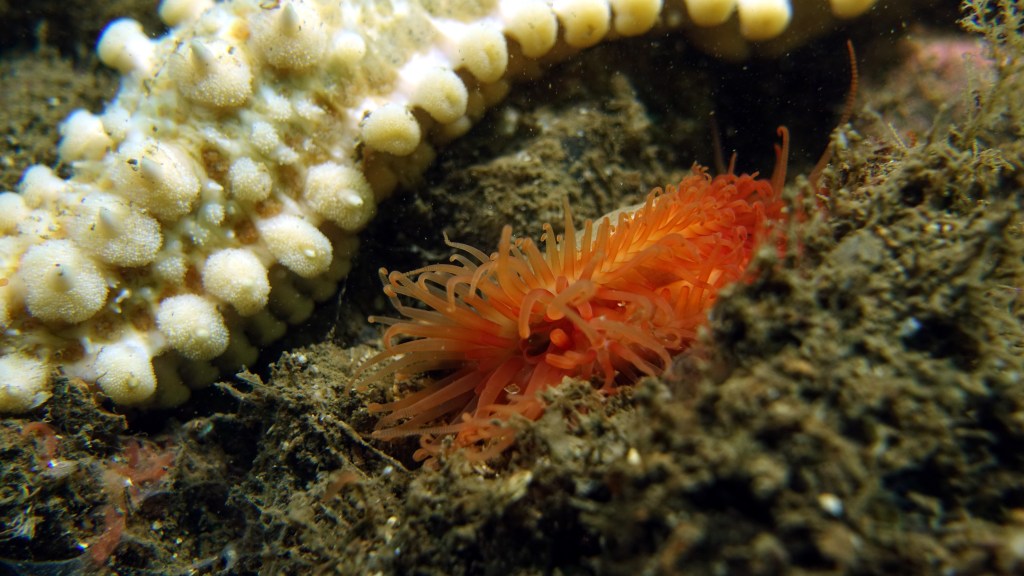
This inelegant start did give me a chance to take in more of Pladda Island, a quote mark-shaped reef topped with salt-scalded turf, that lies a kilometre offshore from Kildonan. Howard Wood, who co-founded Community of Arran Seabed Trust (COAST), told me that Pladda Island is a cornucopia of marine life and offers some of the finest diving to be had around Arran.
Thanks to the COAST’s community mobilisation work, the islet and surrounding waters are part of an extensive protected area. The South Arran Marine Protected Area (MPA) came into being in 2014, with legal enforcement following two years later. It covers an area of around 280 square kilometres (108 square miles) and wraps round Arran’s southern shores from Torbeg on the west coast, as far as Brodick on the east side.
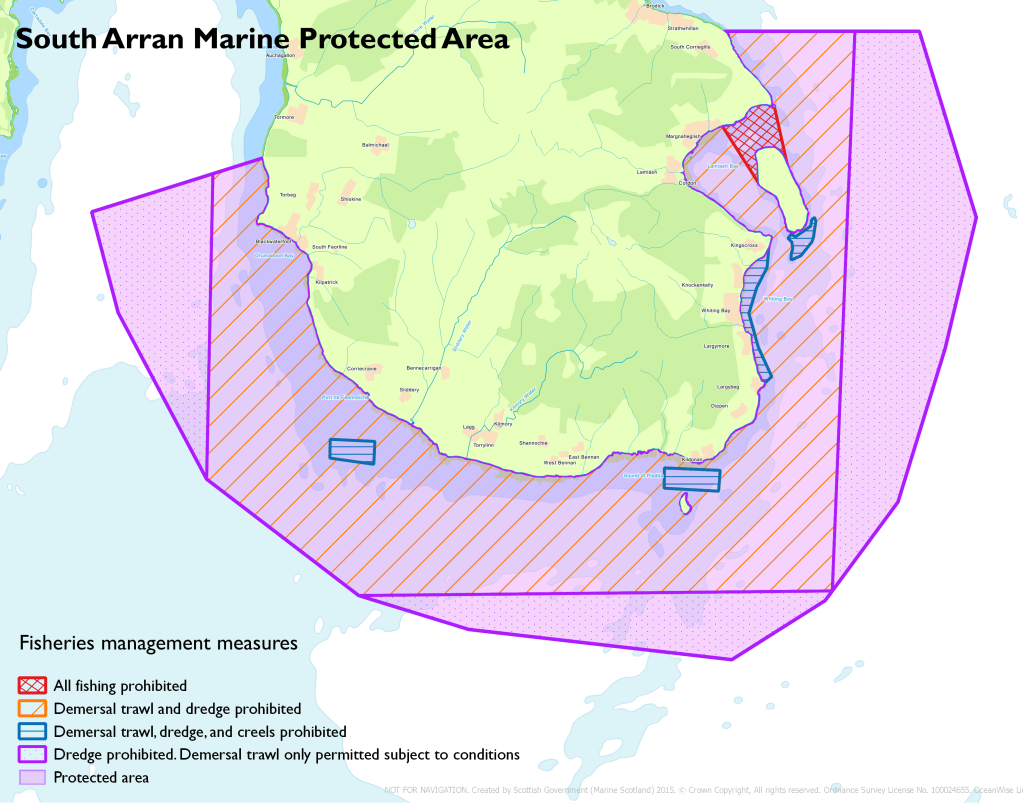
The MPA contains zones with varied levels of protection. Between Arran and Pladda Island, for instance, there is a zone in which demersal trawling (use of towed nets to catch fish and other species on or close to the seabed), dredging and use of creels (pots to catch lobsters, crabs and prawns) are prohibited.
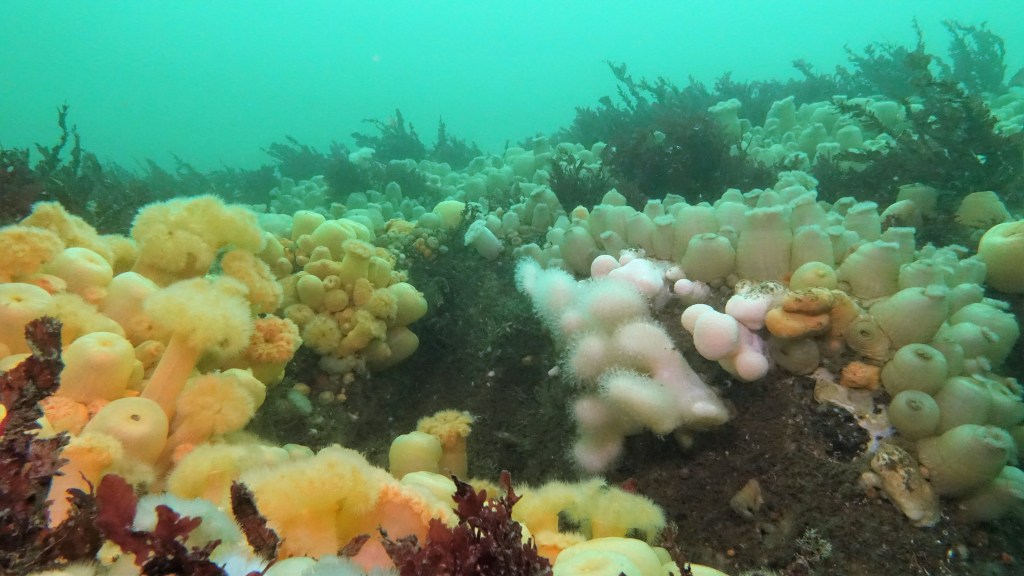
As COAST explain on their website:
“The South Arran MPA is like Scotland’s seas in miniature! Important seagrass, maerl, kelp and burrowed mud habitats provide food and shelter for hundreds of species.
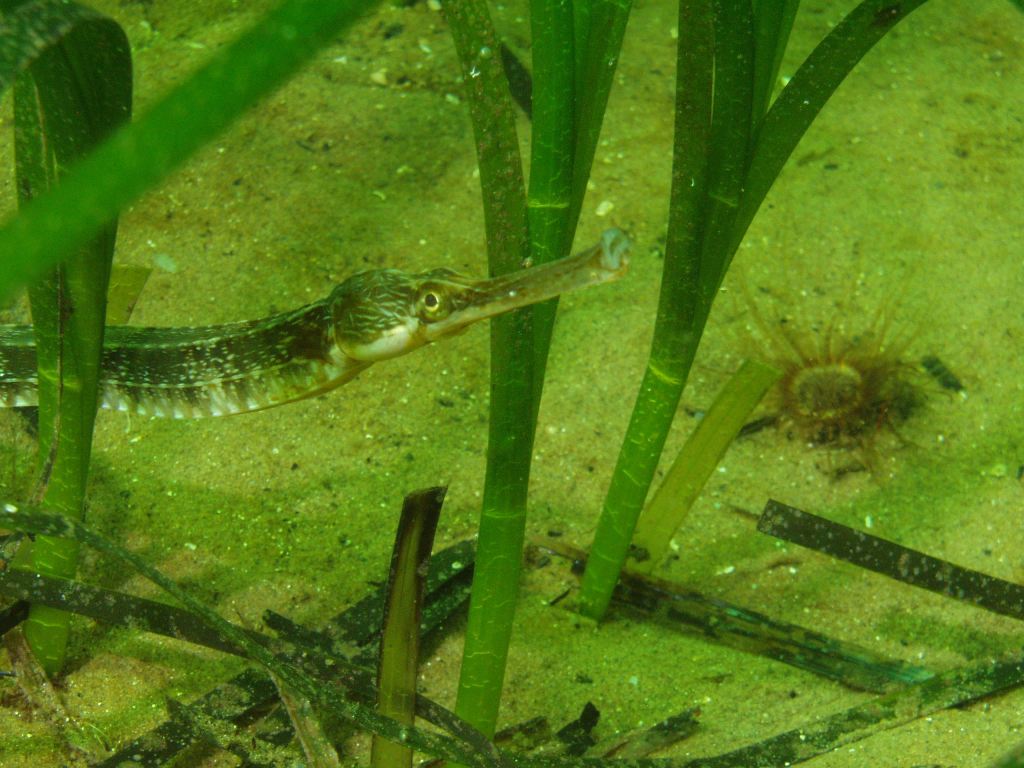
Some iconic species are the charismatic curly octopus, the dainty pipefish, the colourful cuckoo wrasse and visiting basking sharks.
Commercially valuable species such as scallops, lobsters and juvenile cod also benefit from protection. So do resident and migratory sea birds and mammals like black guillemots, harbour seals and porpoises.”
Salty contraband
The name Pladda Island rang a bell for me for a different reason.
Just over a fortnight ago, Frances Wilkins, the leading authority on smuggling around the British Isles, launched her latest book, Smuggling Vessels: Troon Point to Luce Bay 1766-1797. Troon Point is just 20 kilometres due east of Lamlash. I was curious to know what role, if any, Arran played and so I wrote to Frances to ask.
Frances kindly shared with me a fascinating array of extracts from her archive of official documents and other primary source materials. One comes from correspondence between customs officials in 1783 regarding enforcement operations by the Prince William Henry customs vessel stationed in Lamlash Bay:
“5 May 1783 Seized on Island of Pladda, off the south end of Arran, 29 bags of Irish small salt seized out of a small fishing lugsail boat from Larne bound for the Carrick coast. The boat was so leaky he had to leave her at Lamlash until she was repaired and sent to Campbeltown, as a main port, or sold on Arran.”
Frances explained that, when it came to the high value contraband, like alcohol and tobacco, “Arran didn’t have a particular role because it was too close and too obvious. Instead, it had its own smuggling story – salt smuggling from Larne in Ireland.”
The materials Frances sent me give an insight into how the smuggling worked, as well as the intense local hostility towards customs officials. I’ve included just three extracts here to give a flavour:
The first comes from Frances’s 1993 book, Strathclyde’s Smuggling Story:
“Lachlan McNeill, the surveyor at Campbeltown, reported in May 1776 on ‘an open boat belonging to Whiting Bay in Arran, Archibald McAlister master, which was seized… off Glenmanuilt in the Mull of Kintyre, for having imported a parcel of Irish salt from Glenarm in Ireland…
When the people of the seized boat saw the king’s boat in chase of them, they run immediately for the Mull of Kintyre (the nearest shore), where they got the salt thrown out on the rocks and beach before the surveyor and his people could come up and by the time our boat got there a mob of men and women had gathered about the salt, who pelted the surveyor and his hands with stones so smartly that they were obliged to go off without the salt.
Neither Mr McNeil nor the boatmen knew any of the concerned in the mob nor could we since hear what afterwards became of the salt, nor any other certain account of the quantity that had been landed.’”
This next account appears in letters Frances has tracked down that were written by the collector at Campbeltown (on the Mull of Kintyre) to the Board of Customs in Edinburgh:
“Thomson, a native… of Arran, having an excrescence on his left thumb, commands a black clincher-built sloop of about 30 tons burthen, her name he (Neil McMillan, coxswain of the king’s boat) did not learn, belonging to Mr Moody, in Greenock, had in course of the last 18 months shipped at Larne three different times salt in barrels for the fishery on the coast, but which were smuggled into Britain’.
Two other members of the boat’s crew declared that ‘they had one evening skulked behind a deck and in view of Thomson’s vessel… and clearly perceived her sailors hoisting barrels out of the hold, discharge the contents of them into the sea, and next day they saw salt shipped on board of her in the barrels from a yard adjoining a salt pans distant about 15 yards from the vessel…”
Another reference to Arran features in correspondence between the Board of Customs in Edinburgh and the Sheriff of Wigtown on 23rd May 1817:
“Sheriff of Wigtown was directed by the Board of Customs in Edinburgh to take evidence from the officers on board the Prince Edward revenue cutter [government customs enforcement vessel] about an attack made upon them by number of inhabitants of Arran on 25 March last in which two men and a woman were killed and two girls, a young man and a boy wounded.”
As well as writing a wide range of books on smuggling (with several devoted to Ayrshire), Frances also makes documentary films on the same topic. You can see one of these, on the role of smuggling in the life of an Ayrshire village, here: Ballantrae’s Smuggling Story.
A cold swim and a warm welcome
Once I got beyond the Sound of Pladda, I was mentally breaking the swim into three – the stretch to Largybeg Point, then Whiting Bay and then Lamlash Bay. Rounding Largybeg Point, I could see the steep sides of Holy Island five kilometres to the north and Steve and I headed straight towards it. Or as straight as I could manage, that is. I was struggling to find much fluency in my swimming yesterday, with my pull contracting and my leg kick sliding from slight to non-existent.
I have been cold all the way round Arran but yesterday I was shivering almost constantly. Perhaps coming into the day feeling fatigued made me more susceptible. Maybe the sheer grind of plodding through an aquatic no man’s land up to a mile offshore was getting to me. Luckily, the tide was helping me slowly chew my way up the coast.
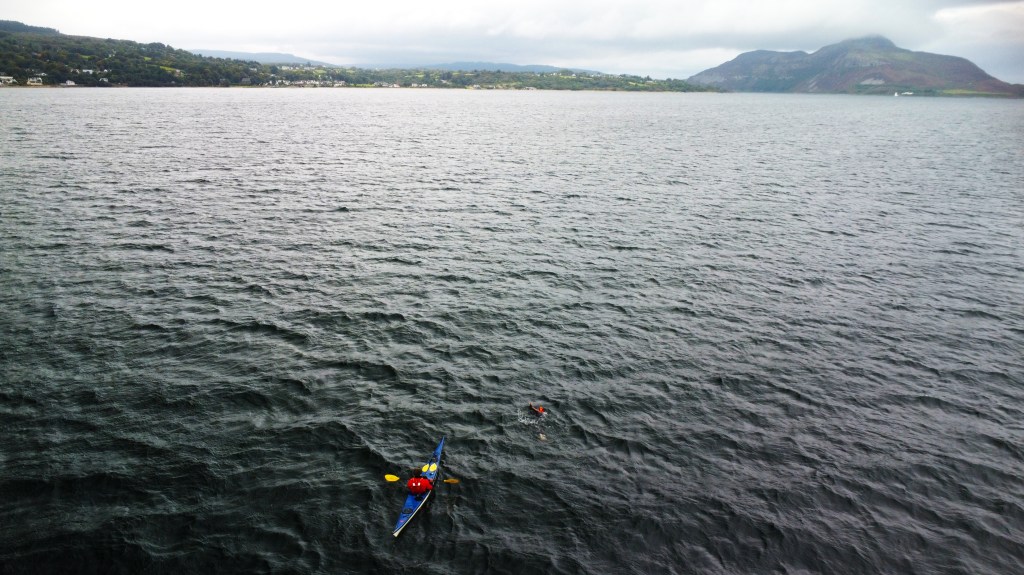
With no nature to divert me, I was pleased, if puzzled, when Steve pointed out our unscheduled aerial escort. “I thought it was a swarm of bees coming over,” said Steve. The drone hovered, banked and swooped over us for a few minutes before vanishing again.
Once I’d rounded Kingscross Point (another Robert the Bruce-associated landmark) and turned into Lamlash Bay I felt happier; knowing that I was into the final three kilometre stretch of the swim.
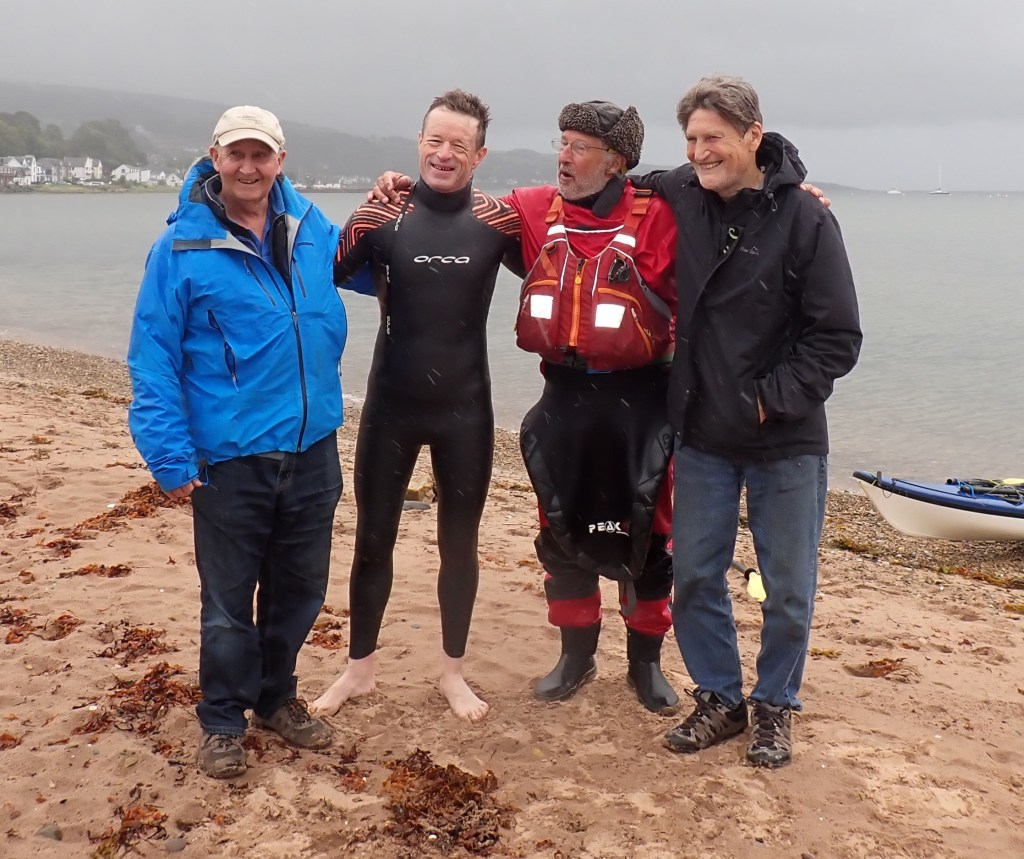
Mist descended as we crept towards Lamlash Village. I struggled to hold in view any of the landmarks Steve pointed out to me. But, after four and a half hours and 13.7 kilometres, I could see raincoat-clad figures on the shore beneath the COAST Discovery Centre. Steve and I received a touching welcome (and chocolate cake!) from COAST team members Elaine and Jenny, whom I had met a week before, and COAST co-founders Don Macneish and Howard Wood. We sat down with hot tea in the Discovery Centre and, after a few minutes, I stopped shivering and dripping sea water on the floor.
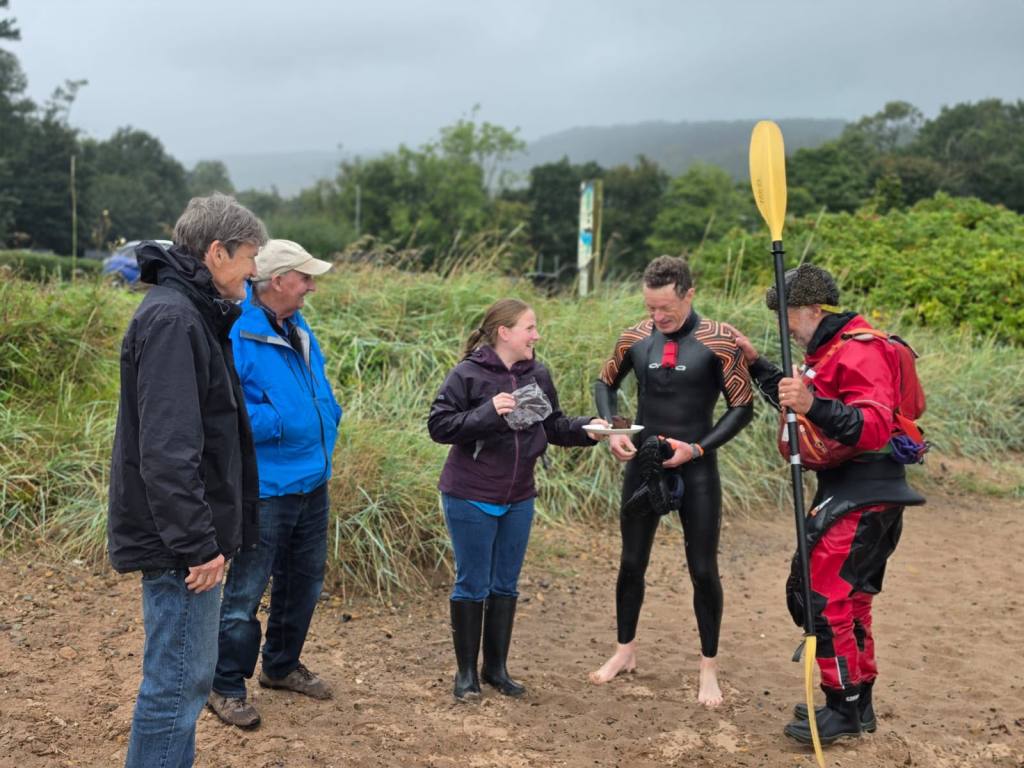
Don I felt I knew, after seeing his moving testimony in the Ocean with David Attenborough film. Howard, the first person I was told to contact about COAST’s work some months ago, introduced himself as the source of the surveillance over Whiting Bay. He had spotted Steve and from his house and launched the drone to take a closer look at how we were getting on. Howard shared with me an amazing selection of footage and photos and I’ve included some of that here.
I often find it hard to make sense of something that’s significant to me coming to a close. But, writing this 24 hours later, I know I feel very happy and fortunate to have had this amazing adventure and to have had the chance to get to know Arran and the amazing work of COAST.
Some thank yous
Thank yous are risky because they can seem self-reverential and there’s always the likelihood of causing injury through omission. But I want to let everyone who sponsored my swim know how much I value their support. And then there are some specific thank yous:
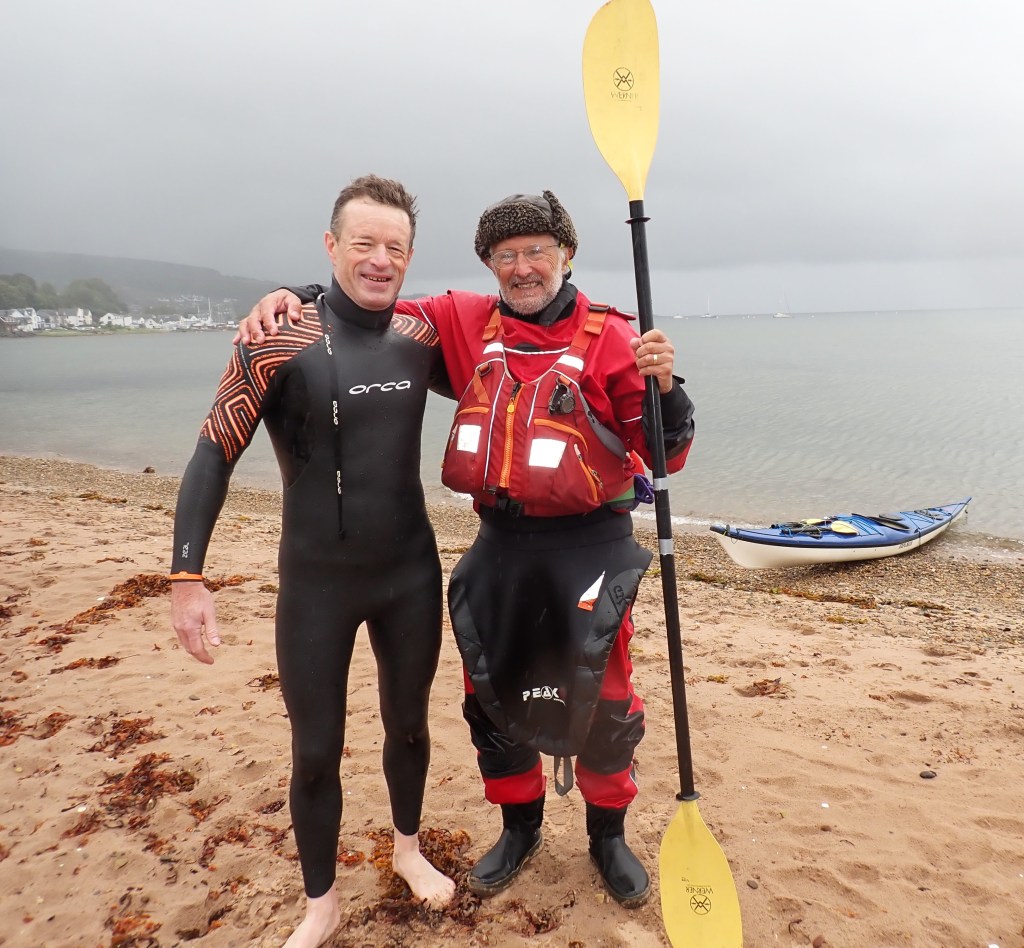
Steve has been an extraordinary mentor, guide and friend to me. There are very few people who have his depth of experience and know-how when it comes to kayaking support to and supervision of open water swimming. Steve usually works with much more accomplished swimmers than me (look up Anna Carin Nordin and Carole Laporte). So I was flattered when he first suggested a swim round Arran way back six years ago. I wouldn’t have considered taking this on without his involvement.
Aine, Don, Elaine, Howard, Jenny, John and Maeve at COAST for their generosity with their time and advice. And a thank you to the whole team at COAST for their truly inspiring work. I wish every coastal community around the British Isles had its own COAST to protect and celebrate the extraordinary marine life we have and which so few of us have a chance to encounter.
Isla for orientation, insight and advice about Arran and for an introduction to Kate, who I want to thank for a sports massage halfway through the swim that loosened a lot of knots and set me up for the remaining stages.
Frances Wilkins for her generosity with her analysis and her unmatched catalogue of materials on smuggling around the Irish Sea and southwest Scotland.
My parents and my sister, for their support of this swim, emotionally and materially.
My friend Jon, for sharing precious memories of Arran and for his incredible generosity.
Most of all – Krisna, for all her love and support. Thank you so much for indulging my strange hobby and making it possible, at a very hectic time, for me to disappear off to Arran for 12 days to do this!
A log of the swims
I’ve tried to keep a track on how far I’ve swum and for how many hours. It’s not very precise as some of the swims have outlived the battery life of my GPS watch. The following is an estimate:
| Date | Route | Distance | Time |
|---|---|---|---|
| 5th September | Lamlash to Brodick | 9.2km | 3 hours 40 minutes |
| 6th September | Brodick to North Sannox | 11.4km | 3 hours 10 minutes |
| 7th September | North Sannox to Lochranza | 13km | 5 hours |
| 8th September | High winds, no swim | ||
| 9th September | Lochranza to Imachar Point | 14km | 5 hours |
| 10th September | Imachar Point | 1.8km | 1 hour |
| 11th September | Imachar Point to Blackwaterfoot | 12.5km | 3 hours 50 minutes |
| 12th September | Blackwaterfoot to Sliddery | 7.5km | 2 hours |
| 13th September | Sliddery to Kildonan | 12km | 4 hours 40 minutes |
| 14th September | Kildonan to Lamlash | 13.7km | 4 hours 30 minutes |


Leave a Reply