Through this swim around the Isle of Arran, I’m raising funds for the vital marine conservation work of Community of Arran Seabed Trust (COAST). You can donate via this JustGiving page here.
For my other daily blog posts, please click here.
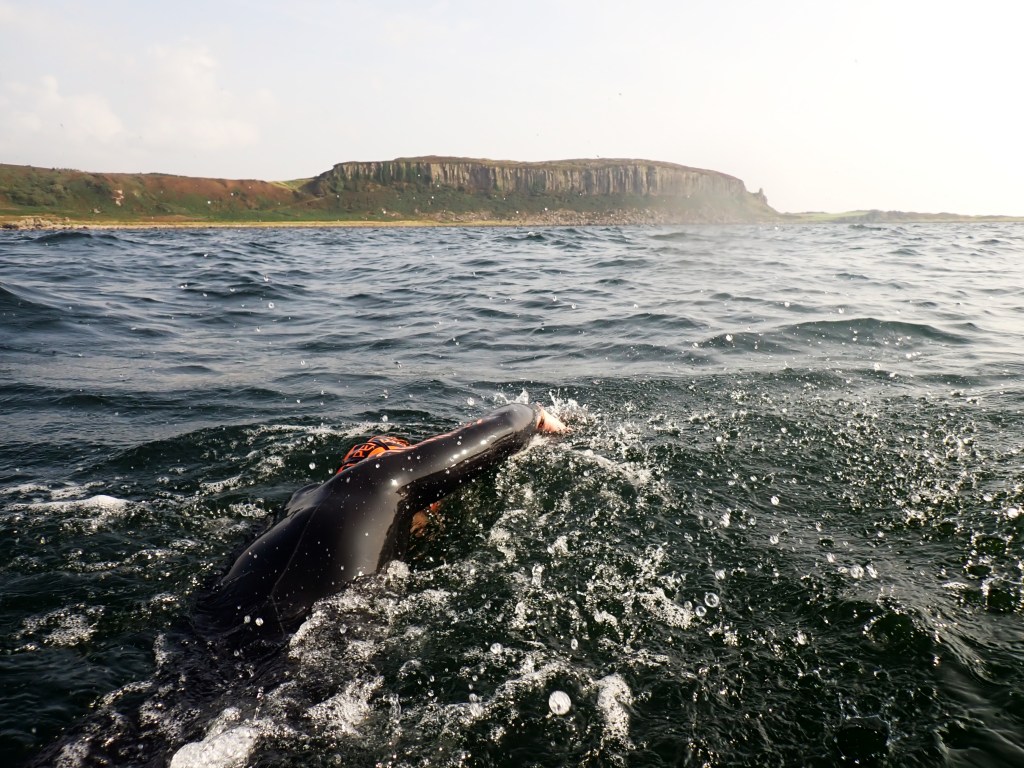
On Thursday I got blown out of the water by winds gusting force 8 and I only covered 1.8km. So yesterday I was reassured by a forecast of much more manageable wind speeds and possibly even some sunshine. I was also nervous. While I didn’t regret giving it a go on Thursday, the experience had knocked my confidence.
A week in, I’ve also started to feel a little bit beaten up, physically. On Thursday Kate at the Heather Lodge holistic treatment centre in Brodick gave me an amazing sports massage that unlocked some of the knots in my back and shoulders.
However my wetsuit appears hellbent on chewing my head off. I now sport a damson choker tattooed into my neck, which is inset with the occasional bead of blood. I’m inclined to blame an over-engineered feature on my otherwise excellent wetsuit. It’s like an Elizabethan ruff made of neoprene and it grows out of a long flap of material stitched into the suit at the level of my tailbone.
To get the ruff in place, I have to bend over, flip it up my back and grab it (without dislocating something important) and then haul it over my head. Folding it up inside the back of my suit may well let more cold water in and give me an unwanted dorsal fin as well. But I think it’s worth a try.
This time, the stone bank and boulder field near Imachar Point where the sea spat me out seemed benign, even soothing. Wavelets licked the pebbles. Just down the shore a group of seals were basking on the biggest rocks (more on them later).
Community of Arran Seabed Trust (COAST), for whom I’m raising funds through this swim, have a fantastic project called Communities and the Sea (CATS). It involves local people by contributing their own knowledge and surveying marine habitats using Remotely Operated Vehicle (ROV), and Drop-Down Video (DDV) techniques to map marine life.
The COAST team analyse the survey results and organise volunteer divers to home in on particular sites. One of the outputs is a fantastic interactive map where you can click on particular sites and view videos and photos of what’s below the waves.
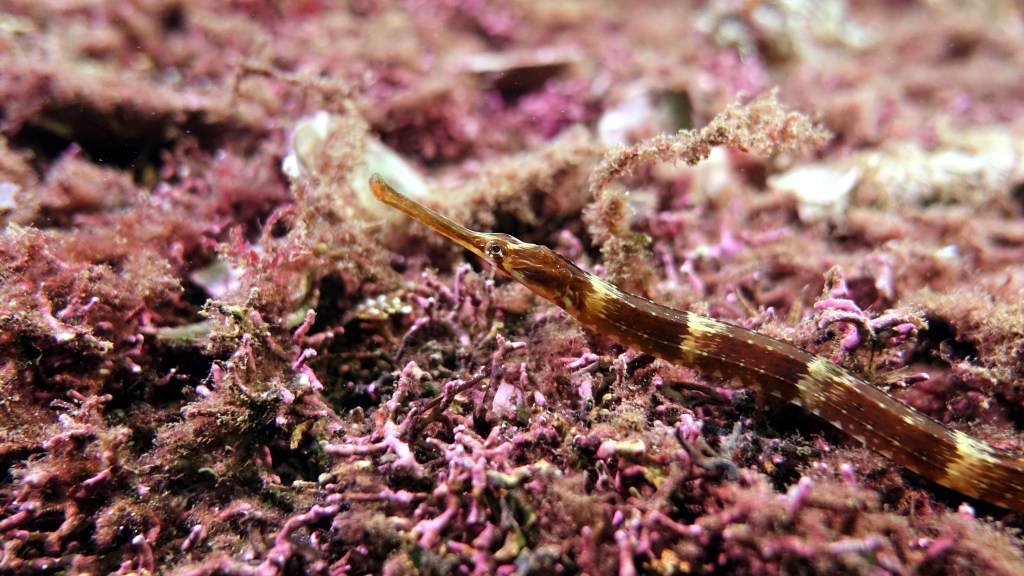
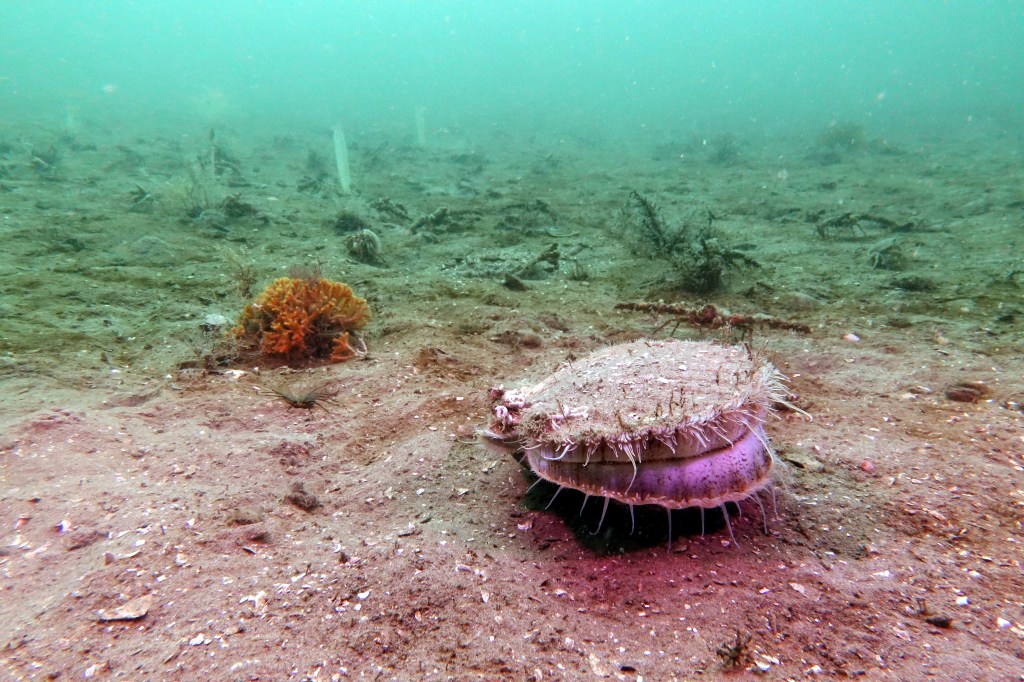
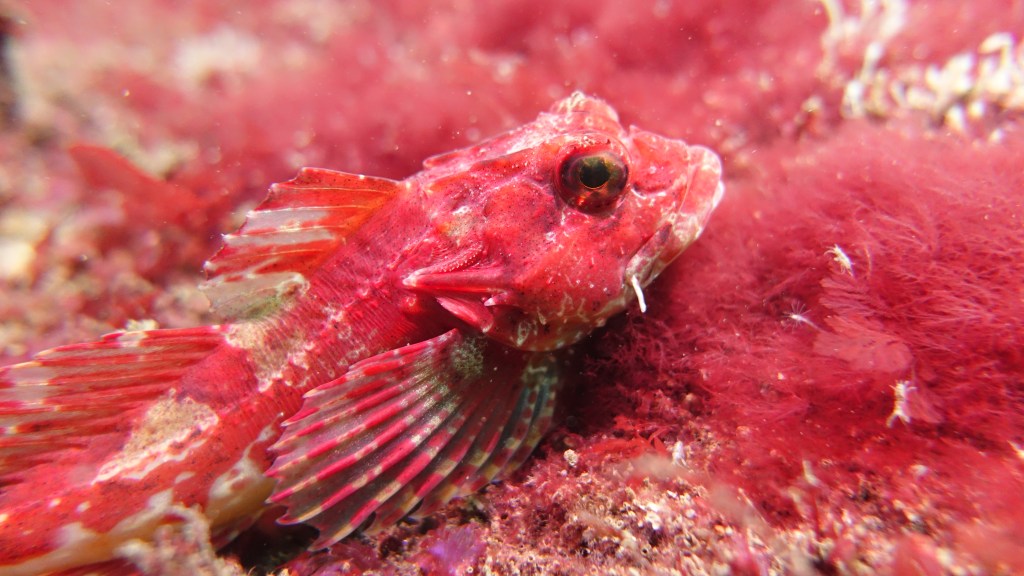
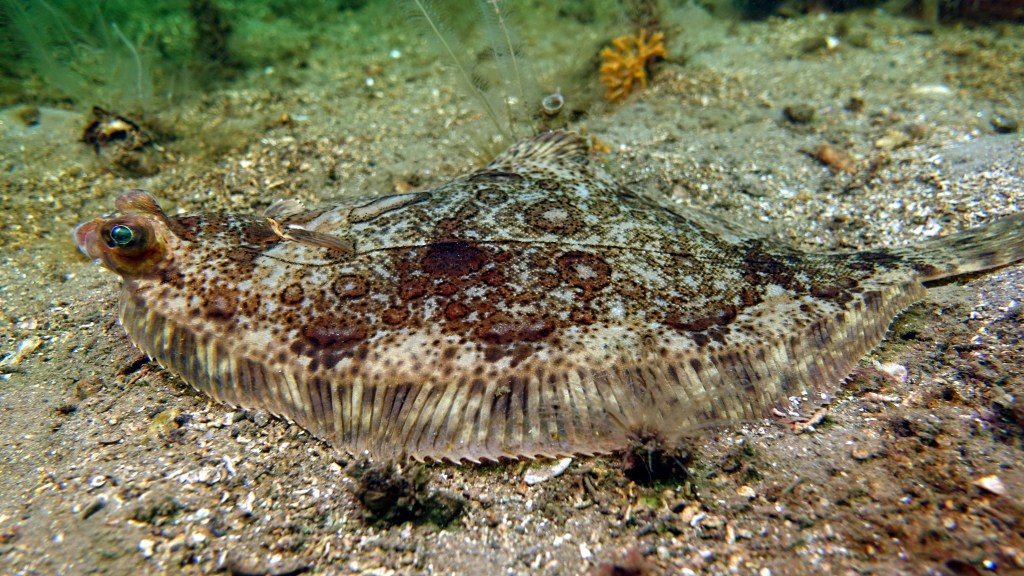
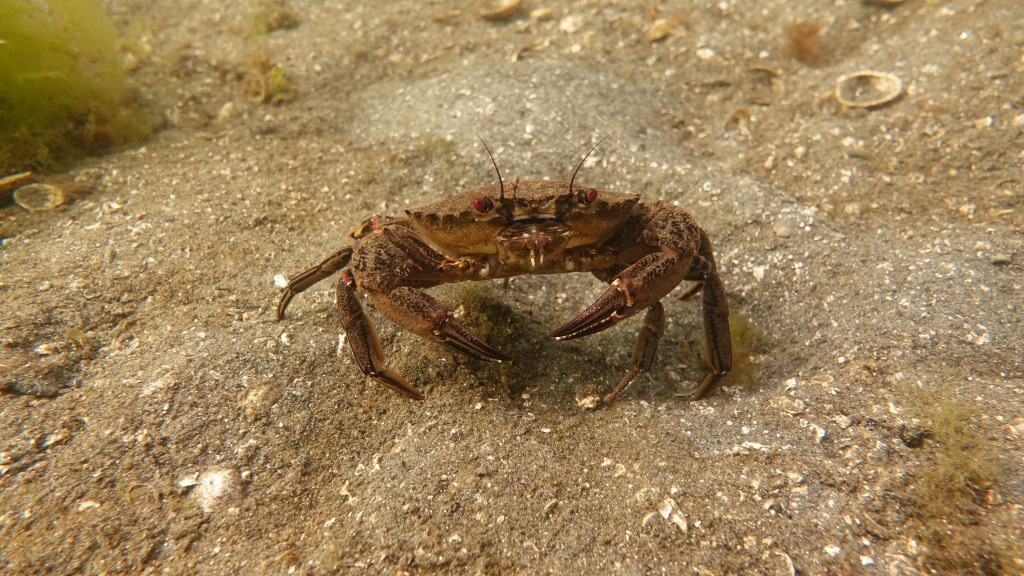
From this, I knew that there’d be plenty to see in Machrie Bay, notably around Dougarie Spur. Here, the CATS project has documented – in beautiful photographs – an array of crustaceans, scallops, fish, anemones, delicate red seaweeds and flamboyant sea slugs.
Sadly, I didn’t see any of this. Worried about losing most of Thursday to the weather, I figured I should concentrate on racking up some kilometres. Steve worked out that if I swam about a mile offshore, I should pick up a tidal flow running south that would help me along. So I swam out to sea for about a mile and then headed for Drumadoon Point, a smudge on the horizon 10 kilometres to the south.
Much as I adore being in the sea, I don’t love this sort of swim. There’s very little nature to fire the senses. Even when the sea is relatively calm, I find sighting on something several kilometres away very difficult. Swimming front crawl, I’m face down, so I have to bob my head up every few strokes to look at what’s ahead. In those split second moments, my eyes are at surface level, so it doesn’t take much more than a ripple to block my field of vision. More time with head up means more time with legs sinking and a loss of momentum.
All the peering into the cyan gloom sometimes makes for quality thinking time. But it’s hard to hold back the “are we nearly there yet?” voice in my head and nervous irritation that I’m not moving quicker.
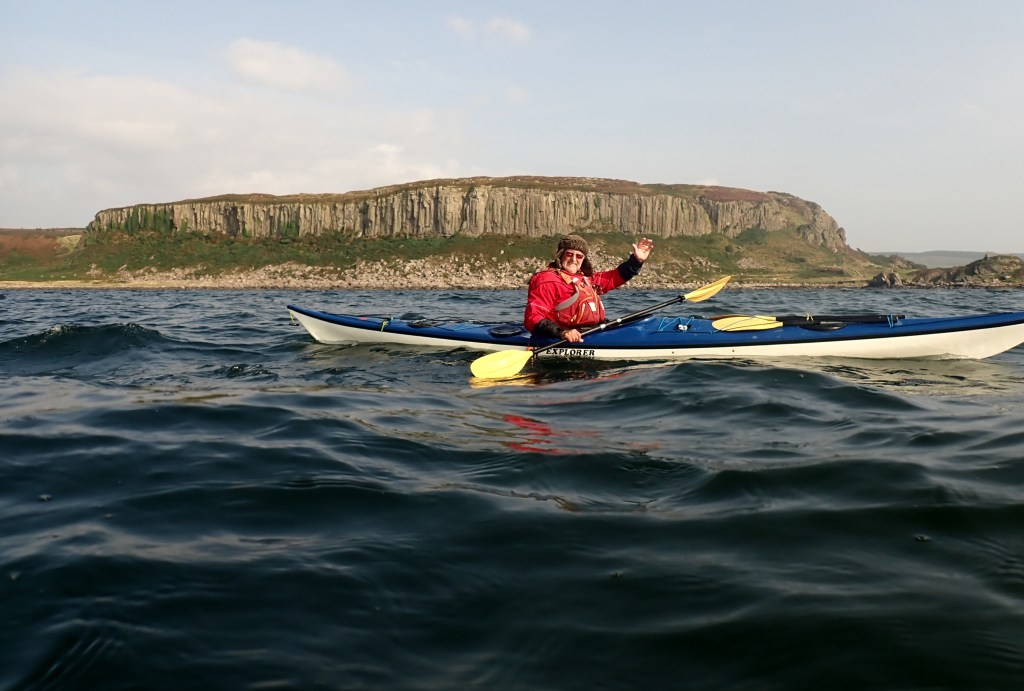
As it turned out, Steve was right, there was a bit of push from the tide and I swam much quicker than I would have in neutral conditions. Moreover, Drumadoon Point, when I finally got there, almost made up for the preceding three hours.
Drumadoon Point is a hulking volcanic plateau that rises out of the water and has a long facade of cliffs formed of 30 metre high basalt columns. From out at sea it looks like baleen plates in the mouth of an enormous Triassic whale. Drumadoon Point is the site of an Iron Age fort and settlements. As described in my copy of the History of the Villages of the Isle of Arran 2025:
“In 2023, archaeologists from Glasgow University and across the UK, collaborating with local volunteers, began an excavation at Drumadoon. What they found is almost certainly the only complete neolithic cursus [a Neolithic monument comprising of one or more rectangular enclosures]. This vast enclosure, which dates to between 4000 and 3000 BC is believed to have been built as a space for procession, ceremony and gatherings.
At three hours fifty minutes, we reached the mouth of the silty stream which gives Blackwaterfoot its name. I’d moved another 12.5 kilometres down the west coast of Arran. My body was drained but my morale replenished.
Driving back to our start point, to pick up Steve’s car, I spotted the seals in the same spot where they’d been basking on the boulders five hours earlier. Silhouetted against a silver sea and the Mull of Kintyre beyond, the seals (to my inexpert eye at least) had a relaxed air. One of them, neatly balanced atop its own little atoll, was flexing its head and its tail up towards the sky. The technical term for this behaviour is ‘bananaing’. In her fabulous Seal Secrets book, seal expert Sue Sayer explains this behaviour as follows:
“A dry, hauled-out seal splashed by a rising tide feels the cold water most at its extremities, which results in ‘bananaing’ – a characteristic behavioural reaction, where the seal lifts its head and tail in an arc at the same time! A seal’s flippers possess counter-current heat exchange systems: veins wrap around arteries, recapturing warmth and returning it with blood back to the body.”
Another seal was swimming through the water in a series of leaps and dives, which made me think of a human swimming butterfly. I’ve never seen this before and don’t know what it means. But it looked playful and added to an already delightful and tranquil scene.
In a previous blog I mentioned that, on Tuesday, I had a chance to visit COAST’s office and learn more about the charity’s inspiring work from Elaine, Jenny and Katy.
Jenny first collaborated with the organisation when she was an MSc research student, conducting baseline dive surveys with COAST co-founder Howard Wood. She has been a member of the COAST staff team since 2016 and her current role is Outreach and Communications Manager. Jenny kindly offered to field a few follow-up questions and came back with a series of illuminating responses which I’ve set out below (plus some more of COAST’s fabulous photos). Please do have a read!
Mike: What is distinct about COAST’s approach to marine conservation and what have been the foundations of your success in protecting Arran’s marine life?
Jenny: The model here on Arran is one of community; the power of grassroots activism cannot be underestimated. COAST’s journey is one of perseverance, tenacity and an underlying belief that communities can make real change happen.
We began with local people recognising the decline in Arran’s marine environment and taking action to address it. Rather than waiting for solutions to come from government, the community developed its own proposals, built relationships with scientists, fishermen, policymakers and other stakeholders, and campaigned for the protection it believed was needed.
By using local knowledge and ensuring our conservation work has always been community-led and evidence-based, we have focused on achieving lasting change.
Mike: What are the main challenges COAST and its work face and what can be done to overcome them?
Jenny: One of the main challenges COAST faces is that marine protection is only as effective as the management and enforcement behind it. Arran has demonstrated that when areas are properly protected, marine life can recover, but illegal fishing, limited monitoring and gaps in enforcement can undermine that progress and compromise long-term research.
We also face the wider pressures affecting our seas, including climate change, pollution and competing demands for marine space. These challenges are complex and cannot be addressed by one organisation or one community alone. They require stronger government leadership, effective regulation, better monitoring and a genuine ecosystem-based approach to managing Scotland’s seas.
For COAST itself, as a community charity, capacity and sustainable funding are ongoing challenges. Our work spans conservation, research, education, community engagement and advocacy, and maintaining the skills, people and resources needed to do all of this effectively is essential.
Overcoming these challenges requires us to continue doing what has worked for COAST for three decades: building strong community support, working collaboratively, gathering robust evidence and remaining persistent. We need to ensure that local knowledge and communities have a meaningful voice in decisions about their seas, while continuing to demonstrate through research and monitoring what effective protection can achieve. We also need stronger partnerships between communities, scientists, conservation organisations, responsible fishers and government.
Ultimately, the biggest opportunity is to build on what Arran has already shown: marine recovery is possible when communities are empowered to act, protection is properly managed, and there is long-term commitment to the health of our seas.
Mike: What are your main priorities for the remainder of 2026 and beyond?
Jenny: Ultimately, COAST want to build on the progress made over the past three decades and ensure that Arran’s marine environment continues to recover and thrive. Over the years, we’ve often been asked “What about the rest of Arran’s seas?”
In 2025 we launched our Communities and the Sea (CATS) project, with the aim of answering that question. CATS aims to connect with islanders to understand Arran’s rich marine heritage, as understanding the historical and cultural past of island communities and local fisheries provides long-term knowledge that modern data can’t capture. By collating stories of fish populations or migration patterns, traditional fishing practices reflecting respectful relationships with fish stocks and early conservation practices, we can look to restoring a healthy marine environment once more.
Additionally, a key focus is strengthening the protection and effective management of Arran’s existing marine protected areas. Protection on paper is not enough; we need effective monitoring, compliance and enforcement to ensure that the recovery we have seen continues. We will continue to use research and evidence to demonstrate the ecological, social and economic value of healthy seas and to advocate for stronger marine protection more widely.
Research and monitoring will remain central to our work. Through our own programmes and partnerships with universities and other organisations, we want to better understand how Arran’s marine ecosystems are changing, including the role of habitats such as maerl, seagrass and kelp in supporting biodiversity and storing carbon. Our research vessel, RV COAST Explorer, is an important part of this work, providing opportunities for scientific research as well as public participation in marine science.
We also want to keep the community at the heart of marine conservation. This means expanding opportunities for people to experience, understand and contribute to the sea through education, citizen science, volunteering and community engagement. Our Communities and the Sea work is particularly important in ensuring that the people who live alongside and depend on Arran’s waters have a meaningful voice in their future, and our Ocean Quest education programme aims to embedded live marine conservation work within island education.
Beyond Arran, we will continue to share what has been learned here and advocate for community-led marine conservation across Scotland. Arran has shown that a small community can influence national policy and achieve meaningful ecological recovery when it has the evidence, determination and opportunity to act.
Our ambition is to help create the conditions for other coastal communities to do the same.
Mike: What are you most proud of?
Jenny: From humble beginnings we have shown that communities in action have real power to effect change. We have built a long-term movement rather than focusing on a single campaign. By bringing people together around a shared vision for healthy seas, and maintaining that commitment over decades through community action, science, education and advocacy, we have influenced how our seas are managed.
Our community are proud at having been at the forefront of marine conservation for the past three decades; they have shown that demanding a voice in the management of what is legally a public asset and resource is crucial and they’ve shown what is possible, inspiring others worldwide to help return their local seas to healthier and wilder states.
Mike: How can people reading this blog support COAST and its work?
Jenny: There are many ways people can support COAST and help protect Arran’s seas. Financial support is hugely important. Donations, whether one-off or regular, help us continue our research, education, community engagement and campaigning, and give us the stability to plan for the long term.
But support is about much more than money. People can volunteer their time, skills and knowledge, whether that is helping at the Discovery Centre, supporting events and education, taking part in citizen science or helping with research and communications.
People can also support COAST simply by learning about Arran’s marine environment, sharing our work and talking to others about the importance of healthy seas. Visiting the Discovery Centre or participating in one our public activities is a great way to connect with the marine environment and understand why its protection matters.
Most importantly, we encourage people to have a voice. Support for marine conservation is strongest when communities get involved, share their views and speak up for the future of their seas.
Whether someone gives their time, makes a donation, shares our message, takes part in research or simply becomes more connected to the sea, every contribution helps COAST continue its work to protect and restore Arran’s marine environment for future generations.


Leave a Reply